
Myomectomy Surgery for Uterine Fibroids in Gurgaon
Myomectomy is a surgical procedure to remove uterine fibroids while keeping the uterus in place. It is commonly recommended for women who experience heavy menstrual bleeding, pelvic pain, pressure symptoms, or certain fertility-related concerns due to fibroids.
Dr. Nivedita Kaul is an Obstetrician and Gynaecologist with over 25 years of clinical experience in women’s healthcare. She completed her MD in Obstetrics & Gynaecology at the All India Institute of Medical Sciences (AIIMS), New Delhi, followed by Senior Residency at PGIMER, Chandigarh. She also holds the MRCOG qualification from the Royal College of Obstetricians and Gynaecologists, UK.
Her clinical practice includes the management of uterine fibroids and other gynaecological conditions, alongside minimally invasive and robotic surgery.
If you are considering myomectomy surgery in Gurgaon, understanding the available surgical options, recovery process, possible risks and expected costs can help you make an informed decision.
You can book a consultation with Dr. Nivedita Kaul to discuss your symptoms and explore suitable treatment options for uterine Fibroid Surgery in Gurgaon.
What Is Myomectomy for Uterine Fibroids?
Myomectomy is a surgery that removes uterine fibroids without removing the uterus. Uterine fibroids are non-cancerous growths that develop in or around the uterus.
Some women have fibroids without experiencing any symptoms. Others may develop heavy periods, pelvic pain, abdominal pressure, frequent urination or fertility-related concerns.
When fibroids cause significant symptoms or affect the uterine cavity, a doctor may recommend treatment. For women who want to preserve their uterus, myomectomy is a fibroid removal surgery in Gurgaon that removes the fibroids and keeps the uterus intact.
The procedure can be performed using different surgical techniques,these include laparoscopic myomectomy, hysteroscopic myomectomy and open myomectomy. Each approach has different benefits and limitations.
When Is Myomectomy Recommended?
Myomectomy is usually recommended when uterine fibroids cause symptoms that affect your daily life or when treatment is needed to address specific reproductive concerns.
Here’s when to Consult a Myomectomy Surgeon in Gurgaon
- Heavy menstrual bleeding: Periods that are unusually heavy, prolonged or difficult to manage.
- Pelvic pain or pressure: Persistent discomfort or a feeling of heaviness in the lower abdomen.
- Frequent urination: Fibroids pressing against the bladder may increase the need to urinate.
- Abdominal enlargement: Larger fibroids may cause swelling or a feeling of fullness.
- Fertility concerns: Certain fibroids can affect the shape of the uterine cavity and may be relevant to fertility or pregnancy.
- Persistent symptoms: Symptoms that continue despite appropriate medication or other treatments.
If fibroids are small and do not cause symptoms, monitoring may be sufficient, since not every fibroid requires surgery.
Reach Out for Expert Care
Types of Myomectomy Surgery
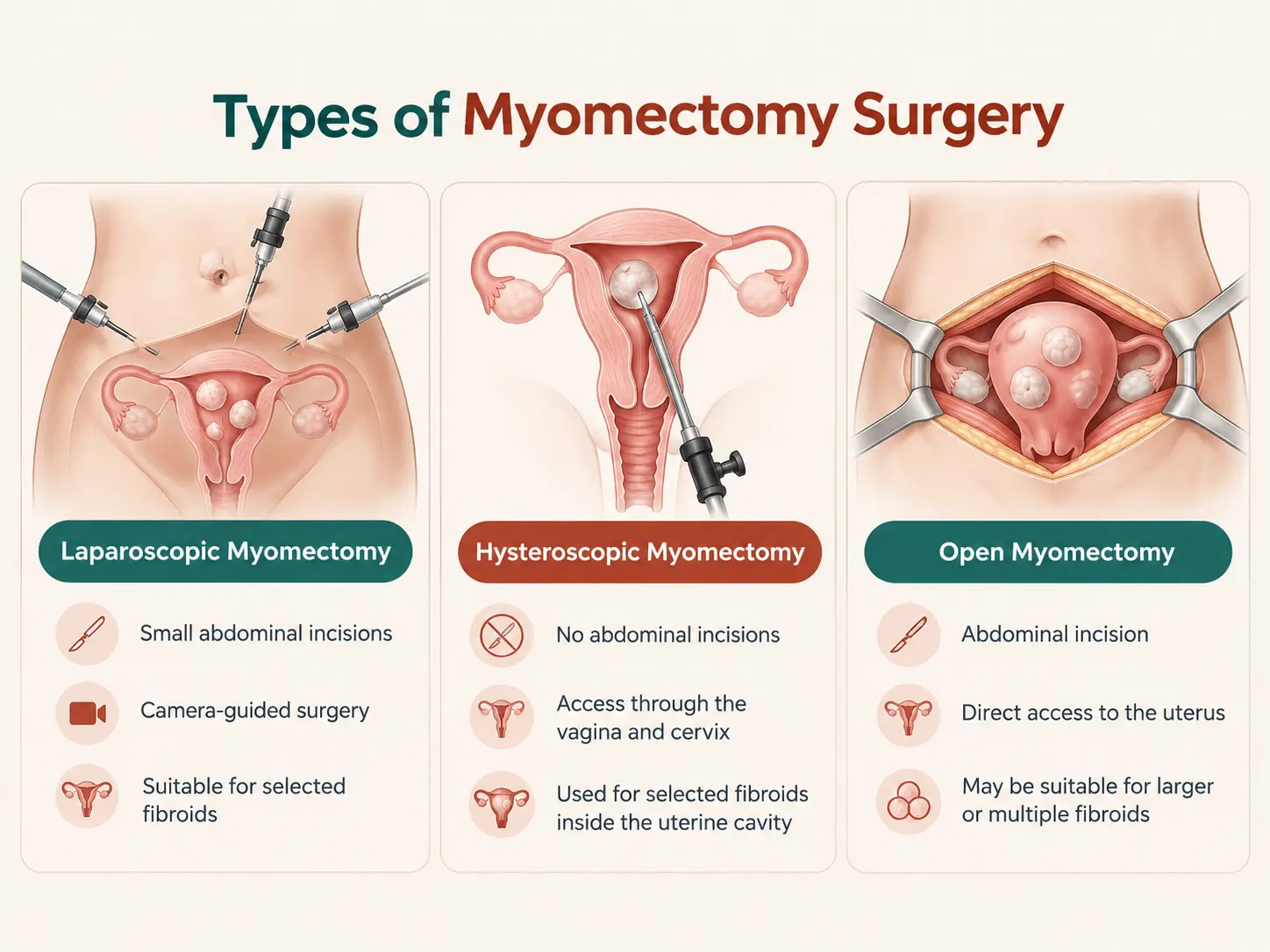
The type of myomectomy recommended depends on the size, number and location of the fibroids, your overall health and your treatment goals.
1. Laparoscopic Myomectomy
Laparoscopic myomectomy is a minimally invasive procedure in which the surgeon removes fibroids through small cuts in the abdomen using a camera and specialised surgical instruments.
It may be suitable for selected patients whose fibroids can be safely removed using this approach.
Benefits of laparoscopic myomectomy include:
- Smaller abdominal incisions.
- Less postoperative discomfort.
- Shorter hospital stays in suitable cases.
- Faster recovery compared with open surgery for many patients.
Laparoscopic myomectomy may be an option for women who meet the clinical requirements for minimally invasive surgery.
If you are searching for laparoscopic myomectomy in Gurgaon, it may be an option when you meet the clinical requirements for minimally invasive surgery. However, it is important to note that not every fibroid can be removed laparoscopically. The decision depends on the fibroids’ size, number and location, as well as the gynaecological laparoscopy surgeon’s assessment and experience
2. Hysteroscopic Myomectomy
Hysteroscopic myomectomy is generally used to remove fibroids that project into the inner cavity of the uterus. The surgeon passes a thin instrument with a camera through the vagina and cervix into the uterus. The fibroid can then be removed without making cuts in the abdomen.
This procedure may be suitable for certain submucosal fibroids, particularly when they contribute to heavy menstrual bleeding or other symptoms.
3. Open Myomectomy
Open myomectomy involves making an incision in the abdomen to reach and remove the fibroids. It may be recommended when fibroids are very large, numerous or difficult to remove safely through minimally invasive techniques.
Open surgery involves a larger incision and generally requires a longer recovery period than laparoscopic surgery. However, it may be the more appropriate option for certain patients.
How Is Myomectomy Surgery Performed ?
Myomectomy surgery is planned according to your symptoms, investigation results and the type of procedure required.
The process generally involves the following steps.
1. Medical Evaluation
- Your doctor reviews your symptoms, menstrual history, medical history and future pregnancy plans.
- An ultrasound is commonly used to assess the size, number and location of the fibroids. Additional investigations may be recommended depending on your condition.
2. Preparing for Surgery
- Before surgery, your doctor may recommend blood tests and other investigations to assess your fitness for the procedure.
- If you have heavy menstrual bleeding or anaemia, treatment to improve your blood levels may be needed before surgery.
- You will also receive instructions about fasting, medicines and other preparations.
3. Removing the Fibroids
- The surgeon removes the fibroids using the selected surgical technique.
- Depending on the procedure, this may involve small abdominal incisions, an open abdominal incision, or access through the cervix.
- The aim is to remove the targeted fibroids while preserving the uterus.
4. Postoperative Monitoring
- After surgery, the medical team monitors your recovery, pain levels, bleeding and overall condition.
- Your hospital stay depends on the type of surgery and how well you recover. Before discharge, you will receive instructions about wound care, medicines, physical activity and follow-up appointments.
What Are the Benefits of Myomectomy?
The main benefit of myomectomy is that it removes fibroids while preserving the uterus.
For women whose symptoms are caused by fibroids, surgery may help improve their quality of life.
Myomectomy benefits include:
- Relief from fibroid-related symptoms: Surgery may reduce heavy menstrual bleeding, pelvic pressure and pain caused by fibroids.
- Preservation of the uterus: Unlike a hysterectomy, myomectomy does not remove the uterus.
- Support for future pregnancy plans: Some women may be able to conceive after surgery, depending on their individual fertility factors.
- Treatment tailored to the fibroids: The surgical approach can be selected according to the size, number and location of the growths.
- Improved daily comfort: Treating symptomatic fibroids may help women return to their usual activities with fewer symptoms.
The results vary from patient to patient. Myomectomy does not guarantee pregnancy, and new fibroids may develop after surgery.
Can You Get Pregnant After Myomectomy?
Yes, many women can become pregnant after myomectomy because the uterus remains in place. However, the chances of pregnancy depend on several factors, including age, ovarian function, the location of the fibroids and other possible causes of infertility.
Removing fibroids that distort the uterine cavity may help some women with fertility-related concerns. However, myomectomy does not guarantee conception or a successful pregnancy.
Some women may need additional monitoring during pregnancy. A caesarean birth may be recommended in certain cases, depending on how deeply the uterus was cut and repaired.
If you are planning a pregnancy, consult Dr. Nivedita Kaul to discuss your fertility goals and explore suitable treatment options based on your individual condition.
What Are the Risks of Myomectomy Surgery?
Like any surgical procedure, myomectomy carries certain risks. The likelihood of complications depends on the size and number of fibroids and your overall health.
Possible risks include:
- Bleeding, which may occasionally require a blood transfusion.
- Infection.
- Injury to nearby organs, such as the bladder or bowel.
- Scar tissue forming inside the uterus or around nearby organs.
- The need to change the planned surgical approach during the operation.
- Fibroids developing again over time.
- Pregnancy-related complications in some women following surgery.
Possible risks of fibroid removal surgery and the care are provided before and after the procedure.
Recovery After Myomectomy Surgery
- Early Recovery
After surgery, you may experience some pain, tiredness and light vaginal bleeding.
Your medical team will advise you on pain relief, movement and wound care. Gentle movement, when recommended by your care team, can help support recovery.
- Returning to Daily Activities
Recovery is generally quicker after hysteroscopic or laparoscopic myomectomy than after open surgery.
Open myomectomy may require several weeks of recovery. Your doctor will advise you when to return to work, exercise, drive and resume other activities.
Avoid heavy lifting and strenuous exercise until you are medically cleared.
- Follow-Up Care
Follow-up appointments help your doctor assess healing and address any concerns.
Seek medical attention if you develop heavy bleeding, fever, worsening abdominal pain, difficulty breathing or other concerning symptoms after surgery.
Recovery after myomectomy varies depending on the type of surgery, its complexity, and overall health. Following the recommended aftercare and attending follow-up visits can help support a smooth recovery.
Reach Out for Expert Care
Myomectomy Surgery Cost in Gurgaon
The average cost of myomectomy surgery in Gurgaon is approximately ₹1.9 lakh, with an estimated range of ₹47,500 to ₹5.7 lakh. The exact cost of uterine fibroid removal surgery may vary depending on the type of procedure, the complexity of the fibroids and the hospital.
Factors That Affect Myomectomy Surgery Cost
The total cost of myomectomy surgery in Gurgaon may depend on:
- Fibroid size and number: The location, size and number of fibroids can affect the complexity of surgery.
- Type of surgery: Laparoscopic, hysteroscopic and open myomectomy may have different costs.
- Surgeon and anaesthesia fees: Professional fees vary depending on the procedure and care required.
- Preoperative tests: Blood tests, scans and other investigations may add to the overall cost.
- Hospital charges: Room category, length of stay and facility fees can influence the final bill.
- Postoperative care: Follow-up visits, medicines and any additional treatment may affect the total expense.
Please note: These are indicative estimates, not a confirmed quotation. The final cost depends on the recommended treatment plan and hospital charges. A consultation with Dr. Nivedita Kaul can help clarify suitable treatment options and the expected expenses for individual needs.
Why Consult Dr. Nivedita Kaul for Myomectomy in Gurgaon?
Choosing a gynaecologist for fibroid surgery involves understanding the doctor’s qualifications, clinical experience and approach to treatment.
Dr. Nivedita Kaul is one of the leading Obstetricians and Gynaecologists in gurgaon with over 25 years of clinical experience in women’s healthcare.
Her qualifications include:
- MD in Obstetrics & Gynaecology: All India Institute of Medical Sciences (AIIMS), New Delhi.
- Senior Residency: Postgraduate Institute of Medical Education and Research (PGIMER), Chandigarh.
- MRCOG: Royal College of Obstetricians and Gynaecologists, UK.
- Clinical experience: Over 25 years in women’s healthcare.
- Areas of practice: Pregnancy care, high-risk obstetrics, fibroids, endometriosis, menstrual disorders and gynaecological surgery, including minimally invasive and robotic approaches.
Her approach focuses on understanding each patient’s symptoms, medical history and reproductive goals before discussing suitable treatment options.
During your consultation, you can discuss:
- The size, number and location of your uterine fibroids.
- Whether monitoring, medication or surgery may be appropriate.
- Which surgical approach may suit your condition.
- How treatment may relate to future pregnancy plans.
- The expected recovery period, possible risks and treatment costs.
The goal is to help you understand your options and make an informed decision about your care.
If you are looking for an experienced myomectomy surgeon in Delhi NCR or Gurgaon, you can book a consultation with Dr. Nivedita kaul to discuss your condition and explore appropriate treatment options.
Key Takeaways
Living with uterine fibroids can raise questions about your health, comfort and future pregnancy plans. Understanding your treatment options is a good first step. Dr. Nivedita Kaul can help you understand whether myomectomy may be suitable for your condition and what to expect from the procedure and recovery.
FAQs
Senior liver specialist with extensive experience in transplant and complex liver care.
Who needs myomectomy for uterine fibroids? expand_more
Myomectomy is usually recommended for women whose fibroids cause significant symptoms, affect the uterine cavity or are relevant to fertility concerns.
What is the cost of myomectomy surgery in Delhi NCR? expand_more
The average cost of myomectomy surgery in Delhi NCR is approximately ₹1.9 lakh, with an estimated range of ₹47,500 to ₹5.7 lakh. The final cost of myomectomy surgery in Delhi NCR depends on the surgical technique, fibroid size and number, hospital charges, investigations and length of stay.
How do I choose a top myomectomy surgeon in Delhi NCR? expand_more
Consider the gynaecologist's qualifications, clinical experience, relevant surgical expertise and ability to explain treatment options clearly.
Can fibroids grow back after myomectomy? expand_more
Yes. Myomectomy removes existing fibroids, but new fibroids may develop later. Some women may experience recurring symptoms and require further treatment.
Can I get pregnant after myomectomy? expand_more
Pregnancy may be possible after myomectomy because the uterus is preserved. However, fertility depends on several factors, and surgery does not guarantee pregnancy.
Is myomectomy better than hysterectomy? expand_more
Myomectomy removes fibroids while preserving the uterus. Hysterectomy removes the uterus and permanently ends the ability to carry a pregnancy. The appropriate option depends on the severity of symptoms, medical history and future reproductive plans.

Dr. Nivedita Kaul's Medical Content Team
Dr. Nivedita Kaul’s medical content team is committed to providing accurate, reliable, and easy-to-understand information on women’s health and gynaecological conditions. The content aims to help patients and their families better understand symptoms, treatment options, surgical procedures, pregnancy care, and recovery, supporting informed discussions with qualified healthcare professionals.
 WhatsApp